Magnus InterGlobe
Tianran Biotech (U) Ltd · Jinja, Uganda · FDA Reg 10061730108

From hide to lot.
One controlled
line.

Every Magnus InterGlobe lot is manufactured at Tianran Biotech's facility in Jinja, Uganda - Plot 5-7, Nyanza Close Road. Vertically integrated: bovine hide sourcing, liming, extraction, filtration, drying, milling, packaging, dispatch - under one US FDA-registered quality system, tested to GB 6783-2013.

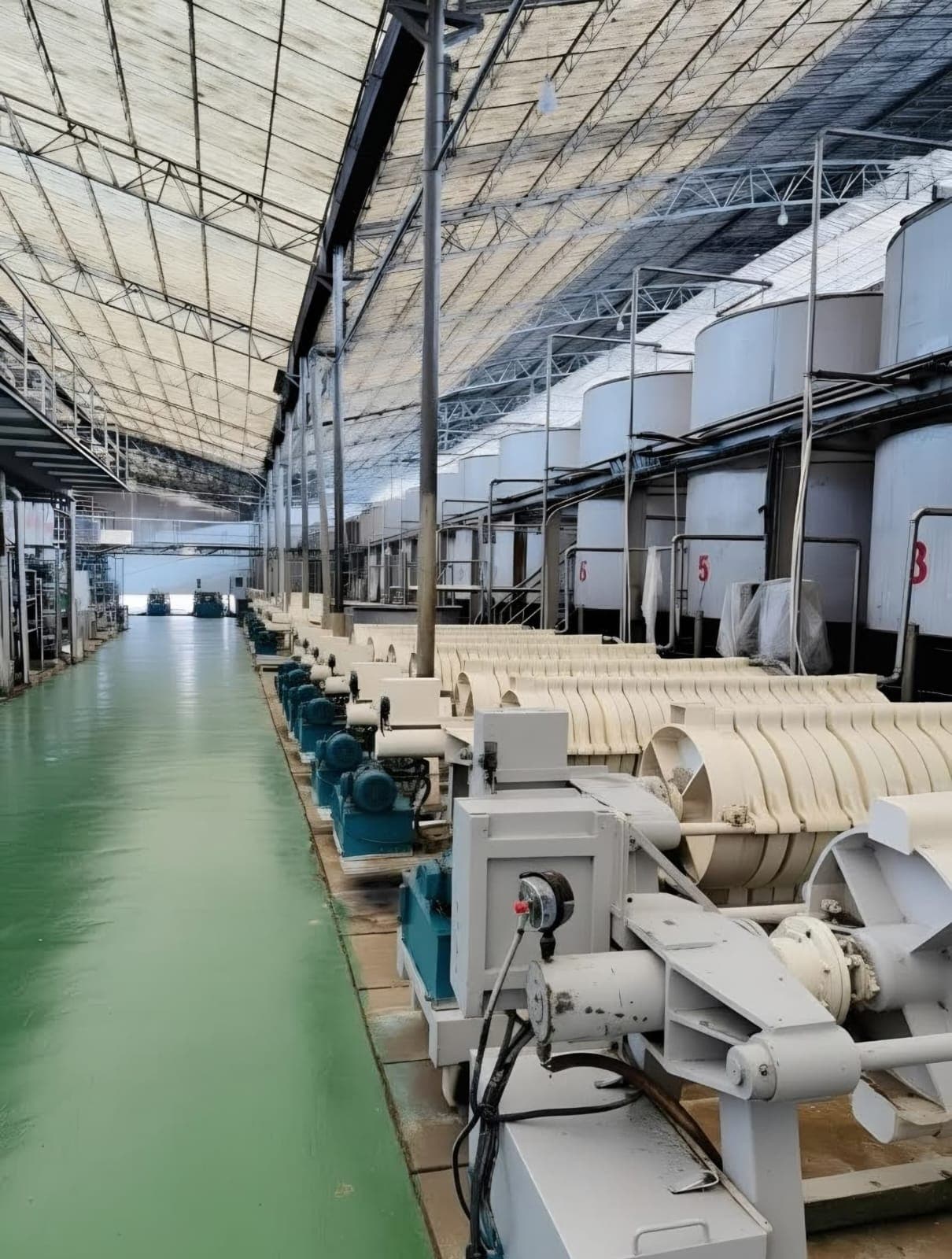
The filtration and clarification line at Tianran Biotech, Jinja, Uganda — rows of cylindrical filter machines in the main production hall
FACILITY · 001 TIANRAN BIOTECH (U) LTD
Production hall.
Drying line in operation.
Plot 5-7, Nyanza Close · P.O. Box 33695, Kampala · Jinja, Uganda
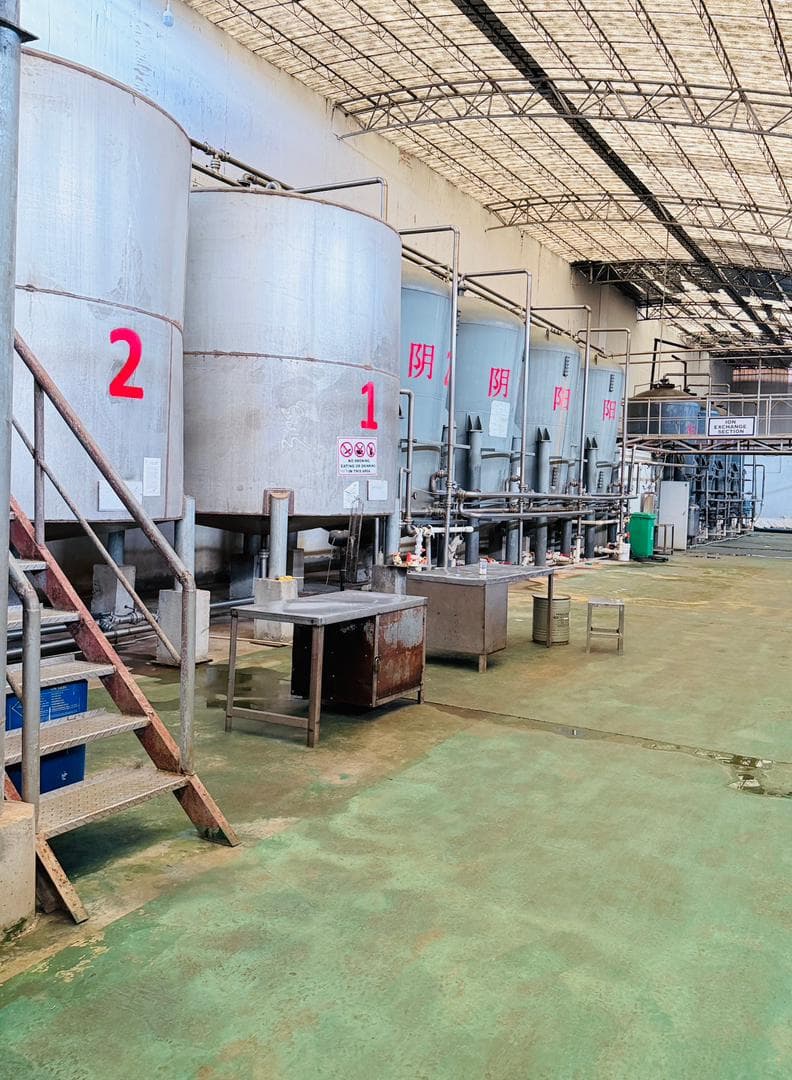
Ion exchange section with numbered stainless steel tanks at Tianran Biotech — water purification for gelatin processing
LAB · QC
In-house QC laboratory
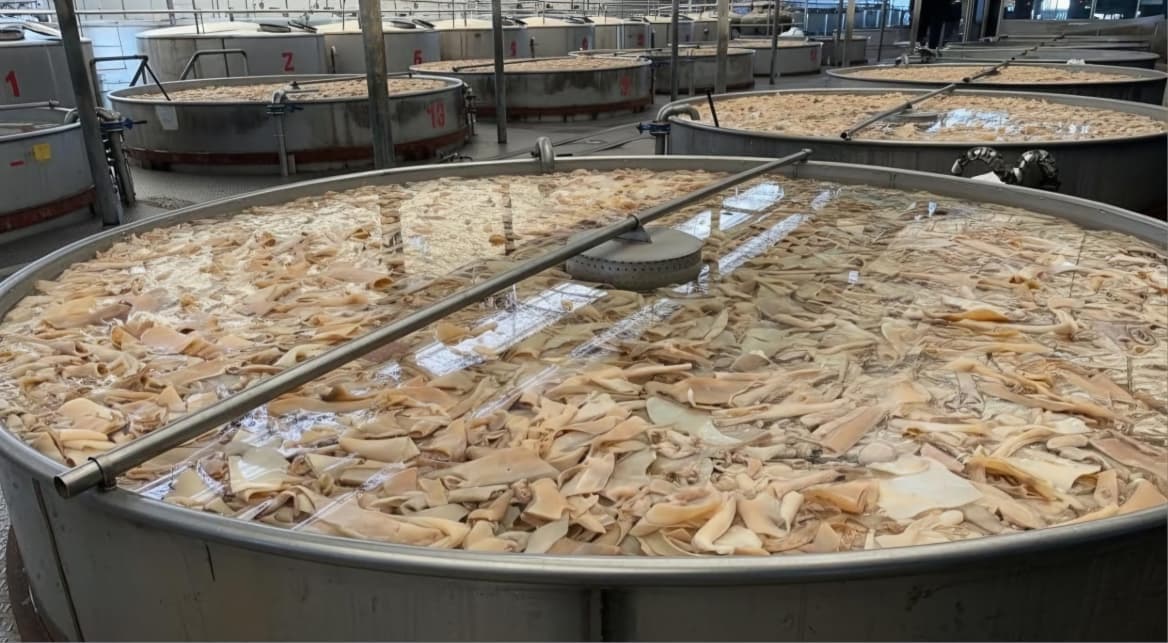
Bovine hide pieces in a circular soaking tank at Tianran Biotech — the raw material stage of bovine skin gelatin manufacture
BY-PRODUCT
Bovine hide
valorization
Annual capacity
8,000 MT/year
Campus
24.7 acres · 150 employees
GFSI certified
FSSC 22000 · BRC GS
US FDA Reg.
10061730108
The Process

Four stages.
Two Critical Control Points.
21–28 days, dock to dispatch.

A purpose-built continuous-flow stainless-steel extraction line that takes fresh Ugandan bovine hide from receiving dock to palletized, metal-detected, export-ready gelatin in 21–28 days. Designed around soft, low-mineral Jinja water - a meaningful technical advantage for bloom strength and clarity.

01 PRE-TREATMENT
Reception → cut → wash

Salted free-range Ugandan bovine hide received, inspected, sized, and washed in agitated water tanks. Veterinary certificates and chain-of-custody recorded at intake.

02 LIQUOR PROCESS
Extract → filter → UF

Alkaline liming, multi-stage hot-water extraction (cascade by Bloom band), two filtration passes, ion exchange, ultrafiltration, then evaporation. Each fraction graded separately.

03 DRYING · CCP1
Sterilize → extrude → dry

Critical Control Point 1: UHT sterilization at >138°C for >4 seconds. Mesh-belt sterile-air drying to target moisture. Milling and crushing to target particle size.

04 BLEND · CCP2
Blend → magnet → detect

Critical Control Point 2: Blend to target Bloom, viscosity, mesh, pH. Dual 12,000-Gauss magnet pass. Metal detection calibrated to 2.0 mm ferrous / 3.0 mm stainless-steel rejection. Palletize into 25 kg LDPE bags.

Production cycle · dock to dispatch 21 – 28 days Ex-factory containerload 6 – 8 weeks From US warehouse 5 – 10 days
Quality Controls

A QC release
before any
lot leaves.

Our on-site lab tests every sub-batch against the application spec. Results are recorded in the Certificate of Analysis that travels with the lot.

Each blended batch is tested for bloom strength on a Texture Analyzer using the standard 6.67% solution method. Viscosity is measured at 60°C using a Brookfield viscometer. Mesh distribution is verified against ASTM E11 sieve series. Results are signed off by a QC chemist before release.

Per GB 6783-2013: total colony count ≤ 1000 CFU/g, coliform ≤ 3 MPN/g, yeast and mold ≤ 50 CFU/g, Staphylococcus aureus ≤ 10/10g. Salmonella negative in 25g, E. coli negative in 10g, Listeria monocytogenes negative in 750g. Every parameter signed off lot-by-lot before release.

Total heavy metals ≤ 40 mg/kg, arsenic ≤ 0.8 mg/kg, chromium ≤ 2.0 mg/kg, lead ≤ 0.1 mg/kg, iron and zinc ≤ 30 mg/kg. Sulfur dioxide (SO₂) ≤ 30 mg/kg, residual hydrogen peroxide ≤ 10 mg/kg. Each value confirmed on the lot CoA.

Every lot is traceable from raw material intake through packaging. Veterinary certificates, supplier declarations, and process records are retained for the regulated lifespan. Recall simulations run twice annually.

Tianran Biotech maintains active US FDA food facility registration (10061730108) and provides Halal certification, veterinary/health certificates, and country-of-origin documentation on request. Customer audits at the Jinja site are welcomed with adequate notice - many of our largest accounts have walked the line.

Certifications & Standards

Certified at every
tier that matters.

US FOOD FACILITY REGISTRATION
FDA Reg.
10061730108

Category: 21 CFR 170.3(n)(22) - gelatin, rennet, pudding mixes, pie fillings.

CHINESE NATIONAL STANDARD
GB 6783-2013

Every lot tested per the GB 6783-2013 method for edible gelatin - physical, chemical, microbiological.

BSE STATUS
BSE-Free

Bovine raw material sourced from BSE-free origin. Declared on every CoA.

RELIGIOUS
Halal

Halal certificate available on request as part of the lot documentation package.

VETERINARY & HEALTH
Vet Cert

Veterinary / health certificate accompanies every shipment for customs clearance.

ORIGIN
Country of Origin

Origin certificate confirming manufacture at Tianran Biotech, Jinja, Uganda.

Sustainability

By-product
valorization,
by design.

Gelatin manufacturing converts what would otherwise be a meat-industry by-product into a high-value, food-grade protein. We take that circular logic further: process water is reclaimed, mineral residues are recovered, and energy intensity is tracked per tonne shipped.

Inputs
Hide valorization

Bovine hide - a by-product of regional meat processing - is converted into a high-value, food-grade protein. Circular by category, by design.

Water
Closed-loop treatment

Process water is biologically treated and polished on-site before discharge. Reduces fresh water draw and effluent load to the surrounding catchment.

Energy
Heat recovery

Steam recovery and heat-exchanger network across extraction, evaporation, and drying. Energy intensity tracked per tonne shipped.

Community
Skilled local employment

Production, lab, and engineering roles staffed locally in Jinja, with on-site training and apprenticeships into specialized food-manufacturing skills.

FAQ - Manufacturing & Quality

Questions auditors and
QA teams ask first.

How is bovine skin gelatin made?
Through four continuous-flow stages with two Critical Control Points: (1) Pre-treatment - reception, cutting, washing of free-range Ugandan bovine hide; (2) Liquor process - alkaline liming, multi-stage hot-water extraction, filtration, ion exchange, ultrafiltration, evaporation; (3) Drying (CCP1) - UHT sterilization at >138°C for >4 seconds, mesh-belt drying, milling to mesh; (4) Blend (CCP2) - blending to target Bloom/viscosity/mesh, dual 12,000-Gauss magnet pass, metal detection (2.0 mm Fe / 3.0 mm SUS), packaging into 25 kg LDPE bags. Production cycle: 21-28 days dock to dispatch.
Is the Jinja, Uganda facility US FDA registered?
Yes. Tianran Biotech (U) Ltd holds active US FDA food facility registration 10061730108, classified under 21 CFR 170.3(n)(22) for gelatin, rennet, pudding mixes, and pie fillings.
What food-safety standard is each lot tested to?
Every lot is tested to GB 6783-2013 - the Chinese national food-safety standard for edible gelatin, covering physical, chemical, and microbiological parameters.
What documentation accompanies each lot?
A lot-specific Certificate of Analysis, BSE-free declaration, country-of-origin certificate, veterinary/health certificate for customs, and Halal certificate on request - all assembled and delivered with the shipment.
Can customers audit the line?
Yes - customer audits at the Jinja site are welcomed with adequate notice. The QA team coordinates schedules, document packs, and on-site logistics.
What is the lead time from order to US delivery?
Ex-factory containerload: 6 – 8 weeks. From the US warehouse network: 5 – 10 days, depending on destination.

Last updated · 2026-05-13

Want to audit the line?
Bring your auditors.

We welcome customer audits. Our QA team coordinates schedules, document packs, and on-site logistics in Uganda.