Gelatin in 2026: why demand
for the quiet protein
is climbing.
For most of the last century, gelatin was a workhorse. It thickened the dessert, formed the capsule, and got out of the way. That role has changed - and procurement teams are noticing the price of not understanding why.
suddenly strategic.
Walk the supplements aisle of any modern pharmacy and count the gummies. Then count the protein bars, the ready-to-mix sachets, the marshmallow-textured snacks. A surprising share of that growth runs through one ingredient almost no shopper can name. As consumers turn against synthetic additives, as protein becomes a marketing claim rather than a nutritional footnote, and as formulators demand predictable, clean-label excipients, gelatin has quietly become one of the most strategically important hydrocolloids in the food and health supply chain.
And yet many buyers - especially those new to the category - don't fully understand what they're purchasing. A bloom value gets treated like a price tier. A certificate is taken at face value. An origin is assumed. The five forces below explain why the category is heating up, and why getting the specification right has stopped being optional.
Indicative industry ranges, not product claims
-
01
The clean-label reflex
Shoppers have learned to read ingredient lists - and to distrust what they can't pronounce. Gelatin reads as a single, recognizable, animal-derived protein. For brands rewriting their decks to drop E-numbers and modified starches, it is often the easiest swap on the bench.
-
02
The protein narrative
Protein is no longer a sports-nutrition concern; it's a mainstream claim across cereals, snack bars, beverages, and gummies. Gelatin contributes 18 of the 20 amino acids and slots into formulations where adding whey or soy would change the texture or the price point.
-
03
The gummy supplement boom
Pills are losing the format war. Consumers want chewables; manufacturers want a base that carries vitamins, minerals, and actives without compromising stability. Gelatin gummies are the runaway winner - and that demand is now outpacing supply in several markets. For these lines, bloom strength in the 180-250 range, consistent mesh, and a low microbial load are non-negotiable.
-
04
Pharma's preference for natural excipients
Soft and hard capsules made from gelatin remain the standard for API delivery - easy to swallow, fast-dissolving, neutral-tasting, with a regulatory file going back decades. Plant-based alternatives exist, but for many actives they introduce stability or cost problems that gelatin simply does not.
-
05
The sustainability angle nobody saw coming
Because gelatin is produced from by-products of the meat industry, it has become an unexpected fixture of circular-economy reporting. Brands that source it well can credibly say they're reducing agricultural waste rather than driving new demand - especially when the raw material is traceable to a single-country, pastoral herd.
A bloom value is specified on paper.
It is earned in production.
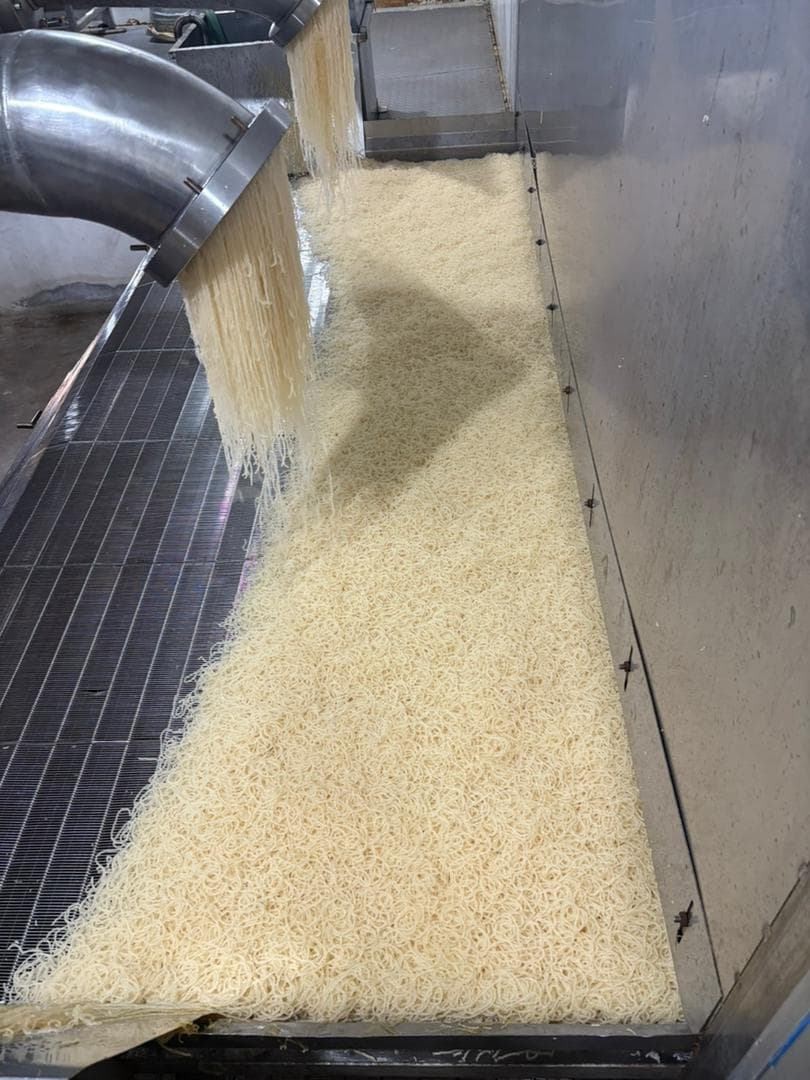
After extraction and sterilization, gelatin solution is extruded into thin noodles and laid onto a continuously moving stainless-steel belt. Air temperature, humidity, and belt speed are held to tight tolerances - too fast and the noodles retain moisture; too slow and bloom strength suffers. It is here, over a drying run that can take up to 60 hours, that the number a buyer writes on the spec sheet is actually made or lost. That is why "not all gelatin is interchangeable" is a production fact, not a sales line.
Inside the Tianran process →
What this means if
you're buying.
A heating market rewards buyers who specify precisely and punishes those who treat gelatin as a commodity. Demand outpacing supply means lead times stretch, substitutions get tempting, and the gap between "bovine, 250 bloom" and a fully documented, single-origin, lot-traceable spec becomes the difference between a stable production line and a quarter spent troubleshooting weeping gummies.
Magnus InterGlobe approaches the category from the opposite end of most brokers: one manufacturer, one product family, one specification book. The gelatin we distribute is bovine skin gelatin from Tianran Biotech in Jinja, Uganda - free-range, grass-fed, BSE-free, FDA-registered, GFSI-certified, with a Certificate of Analysis on every lot. If you want to see how to separate a serious supplier from a risky one, read the companion piece on sourcing red flags.
Sourcing red flags every buyer should know →
Tell us your application.
We'll work back to the grade.
Share your bloom and mesh target, volume forecast, and timing. We'll respond with a technical match against Tianran's catalog, lead time from Jinja, and US-warehouse availability within one business day.